Counterbalance
In my roles as a coach and an engineering manager, I often find myself in situations where I need to help people navigate their feelings. Whether it's an athlete feeling frustrated with their performance or a team member feeling overwhelmed by their workload, my job is to help them find a way through it.
Often, I think of myself as a counterbalance.
in sport
There is a psychological concept called the "Yerkes-Dodson Law" that describes the relationship between arousal and performance. The idea is that there is an optimal level of arousal for peak performance, and too much or too little arousal can lead to decreased performance.
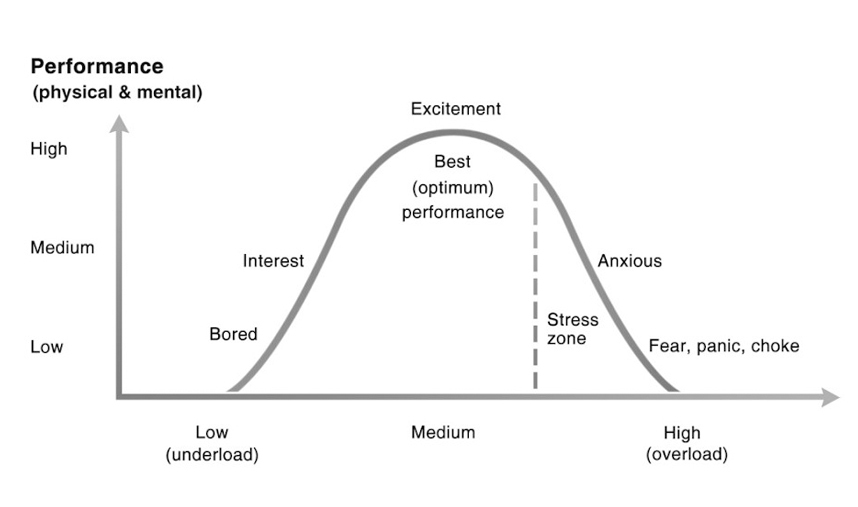 image source: US Sports Camps
As a coach, I try to help my athletes find that sweet spot. If they're too relaxed, I'll bring up the hype energy. If they're too stressed or anxious, I might help them calm down and find their center. Counterbalance.
at work
This manifests in different ways at work. Sometimes, it is about energy: someone's motivation/excitement/anxiety about a project. This is a situation which we can work on together, 1-on-1.
Other times, it's about facilitating team interactions. Balancing the technical needs and wants from engineers with the business needs and wants from product and marketing.
As an example, I might start a day with a leadership meeting where my role is to best represent the engineering team, show off the good work we've done, challenges we're facing, and what we need for support. This is where we negotiate appropriate expectations, with an aim to drive business value while also keeping the team healthy and happy.
Then, I might jump into technical discussions with the team, where my role is now to represent the business context and to help them make decisions that are in line with the company's goals.
It can feel contrarian to be in both roles at the same time. I have to be careful not to let one side dominate the other. If I focus too much on the business side, I risk losing the trust and respect of the engineering team. If I focus too much on the engineering side, I risk losing sight of the business goals and priorities. And it is jarring to bounce between the two sides.
If you feel stuck in the middle, congrats! That's kind of the point. You are a counterbalance. You are helping to keep the team and the organization in balance. It's not easy, but it's important work.